google.com, pub-5223775395072366, DIRECT, f08c47fec0942fa0 Kumpulan Ilmu Komputer

SISIPKAN KODE UNIT IKLAN DISINI

chating

Senin, 04 Mei 2026

Phishing Attack Simulation and Prevention Strategies


 Phishing Attack Simulation and Prevention Strategies

Introduction

Phishing attacks remain one of the most common and effective cyber threats targeting organizations worldwide. Attackers use social engineering techniques to trick users into revealing sensitive information such as credentials, financial data, or access to systems. To combat this threat, organizations must not only implement preventive controls but also conduct phishing simulations to strengthen user awareness.

This article discusses phishing attack simulation and effective prevention strategies in modern organizations.


Understanding Phishing Attacks

Phishing attacks typically involve fraudulent emails, messages, or websites designed to appear legitimate.

Common types:

  • Email phishing
  • Spear phishing (targeted attacks)
  • Whaling (targeting executives)
  • Smishing (SMS phishing)

Attackers often impersonate trusted entities such as banks, vendors, or internal departments.


Phishing Attack Simulation

Phishing simulation is a proactive approach used by organizations to test employee awareness and readiness.

Key components:

  • Sending simulated phishing emails to employees
  • Tracking user interactions (clicks, credential submissions)
  • Measuring awareness levels
  • Providing training based on results

Simulation helps identify vulnerabilities in human behavior and improves overall security awareness.


Detection Techniques

Organizations can detect phishing attempts using:

  • Email filtering solutions
  • Domain reputation checks
  • URL analysis tools
  • SIEM systems for log monitoring

Advanced systems use machine learning to identify suspicious patterns.


Prevention Strategies

Effective phishing prevention requires a multi-layered approach:

1. Security Awareness Training

Employees should be trained to:

  • Recognize suspicious emails
  • Avoid clicking unknown links
  • Verify sender identities

2. Email Security Controls

  • Implement spam filters
  • Use email authentication protocols (SPF, DKIM, DMARC)
  • Block malicious attachments

3. Multi-Factor Authentication (MFA)

Even if credentials are compromised, MFA adds an additional layer of security.

4. Incident Response Plan

Organizations must be prepared to respond quickly to phishing incidents by:

  • Resetting compromised accounts
  • Blocking malicious domains
  • Conducting forensic analysis

Role of SOC in Phishing Defense

A Security Operations Center (SOC) plays a critical role by:

  • Monitoring phishing alerts
  • Analyzing suspicious emails
  • Responding to incidents
  • Updating detection rules

SOC teams ensure rapid detection and mitigation of phishing threats.


Best Practices

  • Conduct regular phishing simulations
  • Keep training programs up to date
  • Monitor user behavior
  • Integrate threat intelligence

Conclusion

Phishing attacks continue to pose significant risks to organizations. By combining phishing simulations, user awareness training, and advanced security controls, organizations can significantly reduce the likelihood of successful attacks. A proactive approach and continuous improvement are key to maintaining strong defenses against phishing threats.
Incident Response Process in Modern SOC Environment


Incident Response Process in Modern SOC Environment

Introduction

In today’s evolving threat landscape, organizations face increasingly sophisticated cyberattacks ranging from ransomware to advanced persistent threats (APTs). A modern Security Operations Center (SOC) plays a critical role in detecting, analyzing, and responding to these threats in real time. An effective incident response (IR) process is essential to minimize damage, reduce recovery time, and strengthen overall cybersecurity posture.

This article explores the incident response process within a modern SOC environment, highlighting key phases, tools, and best practices.


1. Preparation

Preparation is the foundation of an effective incident response process. Organizations must establish policies, procedures, and communication plans before any incident occurs. This includes:

  • Developing an incident response plan (IRP)
  • Defining roles and responsibilities (SOC analysts, incident handlers, management)
  • Deploying security tools such as SIEM, EDR, and firewalls
  • Conducting regular training and tabletop exercises

A well-prepared SOC ensures faster detection and coordinated response during real incidents.


2. Detection and Analysis

The detection phase involves identifying potential security incidents using monitoring tools such as Security Information and Event Management (SIEM) systems. SOC analysts continuously monitor logs, alerts, and network traffic to detect anomalies.

Key activities include:

  • Log analysis and correlation using SIEM tools
  • Identifying indicators of compromise (IoCs)
  • Validating alerts to eliminate false positives
  • Prioritizing incidents based on severity

Effective detection reduces dwell time, allowing organizations to respond quickly to threats.


3. Containment

Once an incident is confirmed, the next step is containment. The goal is to limit the spread and impact of the threat while preserving evidence for further analysis.

Containment strategies include:

  • Isolating affected systems from the network
  • Blocking malicious IP addresses or domains
  • Disabling compromised user accounts
  • Applying temporary fixes or patches

Short-term containment focuses on immediate risk reduction, while long-term containment ensures the threat is fully controlled.


4. Eradication

After containment, the SOC team works to eliminate the root cause of the incident. This phase ensures that no remnants of the threat remain in the environment.

Common eradication actions:

  • Removing malware or malicious files
  • Patching vulnerabilities
  • Reconfiguring security settings
  • Conducting system scans using endpoint detection tools

A thorough eradication process prevents reinfection and strengthens system security.


5. Recovery

The recovery phase focuses on restoring affected systems and returning operations to normal. SOC teams must ensure that systems are clean and secure before reconnecting them to the network.

Key steps:

  • Restoring systems from clean backups
  • Monitoring for recurring threats
  • Validating system integrity
  • Gradually reintroducing systems into production

Continuous monitoring during recovery is critical to detect any signs of persistence.


6. Lessons Learned

The final phase is often overlooked but is crucial for continuous improvement. After resolving an incident, the SOC team conducts a post-incident review to identify gaps and improve future response.

This includes:

  • Documenting the incident timeline
  • Analyzing response effectiveness
  • Updating incident response plans
  • Enhancing detection rules and controls

Lessons learned help organizations become more resilient against future attacks.


Tools in Modern SOC

Modern SOC environments rely on advanced technologies to support incident response, including:

  • SIEM (Security Information and Event Management)
  • EDR (Endpoint Detection and Response)
  • SOAR (Security Orchestration, Automation, and Response)
  • Threat intelligence platforms

These tools enable automation, faster analysis, and improved response efficiency.


Best Practices

To optimize incident response in a SOC, organizations should:

  • Implement automation using SOAR tools
  • Regularly update detection rules and threat intelligence
  • Conduct incident response drills
  • Maintain clear communication across teams
  • Continuously monitor and improve processes

Conclusion

An effective incident response process is vital for modern SOC operations. By following structured phases—preparation, detection, containment, eradication, recovery, and lessons learned—organizations can effectively manage cyber incidents and reduce their impact.

As cyber threats continue to evolve, organizations must continuously refine their incident response capabilities, leverage advanced tools, and invest in skilled SOC professionals to maintain a strong security posture.


Author : Hafid sulistyo rachman

Malware Analysis: Techniques for Identifying and Mitigating Modern Cyber Threats


Title: Malware Analysis: Techniques for Identifying and Mitigating Modern Cyber Threats

Article Content:

In today’s rapidly evolving digital landscape, malware remains one of the most significant threats to organizations and individuals. Malware is no longer limited to traditional viruses; it now includes ransomware, trojans, spyware, and advanced persistent threats (APT). As cyberattacks become more sophisticated, the ability to perform effective malware analysis is a critical skill for cybersecurity professionals, especially those holding certifications such as CySA+.

Malware analysis is the process of examining malicious software to understand its behavior, origin, and impact on affected systems. The primary goal is to detect threats, identify how they operate, and develop effective mitigation strategies to prevent further damage.

There are two primary approaches to malware analysis: static analysis and dynamic analysis. Static analysis involves examining the malware without executing it. This includes inspecting file structures, strings, and signatures using specialized tools. While this method is relatively safe and fast, it may not fully reveal the behavior of obfuscated or encrypted malware.

Dynamic analysis, on the other hand, involves executing the malware in a controlled environment such as a sandbox or virtual machine. This allows analysts to observe the malware’s behavior in real time, including system modifications, network communication, and registry changes. Dynamic analysis provides deeper insights into how malware interacts with its environment and how it propagates.

To ensure a structured approach, many organizations follow guidelines from the National Institute of Standards and Technology (NIST), which provides comprehensive frameworks for incident handling and malware analysis. These standards help improve consistency and effectiveness in cybersecurity operations.

Security analysts often rely on specialized tools during malware investigations. For example, Wireshark is widely used to capture and analyze network traffic, helping identify suspicious communications between infected systems and command-and-control (C2) servers. Another powerful tool is IDA Pro, which supports reverse engineering and allows analysts to study malware code at a low level.

A well-known example of a major malware attack is WannaCry, a ransomware outbreak that impacted organizations worldwide. The attack exploited unpatched vulnerabilities in Windows systems, highlighting the importance of regular updates, vulnerability management, and proactive threat detection.

In addition to analysis techniques, identifying Indicators of Compromise (IoCs) is essential. IoCs may include file hashes, malicious IP addresses, suspicious domains, or unusual system behavior. These indicators are crucial for enhancing detection systems such as SIEM and Endpoint Detection and Response (EDR) solutions.

Within a Security Operations Center (SOC), malware analysis plays a key role in the incident response lifecycle. Analysts must quickly identify threats, contain infected systems, and ensure complete remediation. Effective communication and documentation are also vital to ensure lessons learned can improve future defenses.

In conclusion, malware analysis is a fundamental component of modern cybersecurity strategies. By combining static and dynamic analysis techniques, leveraging industry-standard frameworks, and utilizing advanced tools, organizations can significantly enhance their ability to detect, analyze, and respond to cyber threats. For CySA+ professionals, mastering malware analysis not only strengthens technical capabilities but also contributes to overall organizational resilience against evolving cyber risks.

Author : Hafid sulistyo rachman

Kamis, 30 April 2026

Incident Response Simulation: Lessons Learned from a Tabletop Cybersecurity Exercise


Incident Response Simulation: Lessons Learned from a Tabletop Cybersecurity Exercise

Introduction

In today’s rapidly evolving threat landscape, organizations must be prepared to respond effectively to cybersecurity incidents. Incident response (IR) is a structured approach to identifying, managing, and mitigating security breaches. One effective way to test an organization’s readiness is through tabletop exercises, which simulate real-world attack scenarios in a controlled environment.

This article discusses the importance of incident response simulations and highlights key lessons learned from conducting a tabletop exercise involving phishing and malware attacks.


Understanding Incident Response

Incident response is a critical component of any cybersecurity program. It typically follows several phases: preparation, identification, containment, eradication, recovery, and lessons learned. These phases ensure that organizations can respond systematically to minimize damage and restore operations quickly.

A well-prepared incident response plan helps reduce downtime, financial loss, and reputational damage. It also ensures compliance with security standards and frameworks.


Tabletop Exercise Scenario

In this simulation, the organization conducted a tabletop exercise focused on a phishing attack that led to malware infection. The scenario began with an employee receiving a suspicious email containing a malicious attachment. Once opened, the malware attempted to establish persistence and communicate with a command-and-control (C2) server.

Participants included IT security staff, system administrators, and management representatives. Each team member was assigned a role in the incident response process.


Response Actions and Tools

During the exercise, the team followed the incident response lifecycle:

  • Identification: Security monitoring tools detected unusual network traffic originating from a user endpoint. Alerts were generated for further investigation.
  • Containment: The affected system was isolated from the network to prevent lateral movement.
  • Eradication: Malware was removed using endpoint detection and response (EDR) tools.
  • Recovery: Systems were restored from clean backups and monitored for any signs of reinfection.

Tools such as SIEM platforms and EDR solutions played a key role in detecting and responding to the incident. Log analysis provided valuable insights into attacker behavior.


Key Lessons Learned

The tabletop exercise revealed several important insights:

  1. Communication is Critical: Clear communication between teams significantly improved response time and coordination.
  2. Preparation Matters: Having a well-documented incident response plan reduced confusion during the simulation.
  3. User Awareness is Essential: The phishing attack highlighted the need for continuous security awareness training.
  4. Tool Integration: Proper integration between SIEM and EDR tools enhanced visibility and detection capabilities.

Additionally, the exercise identified gaps in escalation procedures and documentation, which can be improved for future incidents.


Conclusion

Incident response simulations such as tabletop exercises are invaluable for improving organizational readiness against cyber threats. They provide a safe environment to test processes, tools, and team coordination.

By conducting regular simulations and incorporating lessons learned, organizations can strengthen their cybersecurity posture and reduce the impact of real-world incidents. Investing in incident response preparedness is not just a technical necessity but a strategic priority.


References

  • NIST Computer Security Incident Handling Guide
  • SANS Incident Response Framework
  • OWASP Security Practices
Author: Hafid Sulistyo Rachman 
Date Published: April 2026

Senin, 08 Januari 2024

Mengenal Prinsip Privacy dari Standar Internasional (ISO) Perlindungan Data Pribadi


Mengenal Prinsip Privacy dari Standar Internasional (ISO)


Jika anda sudah sempat membaca artikel perkenalan Data Privacy yang sebelumnya saya tulis (saya sarankan dibaca dulu), maka disitu anda akan mengetahui bahwa terdapat standar, framework, dan best practice untuk Data Privacy.

Jika berbicara tentang standar, umumnya kita akan mengacu kepada ISO. ISO 27701 (Privacy Information Management System) merupakan ekstensi dari ISO 27001 dan ISO 27002 yang spesifik mengatur tentang standar dari Pivacy Management. ISO 27701 juga mengambil konsep dari ISO 29100:2011 tentang Privacy Framework. Bisa dikatakan bahwa ISO 27701 ini diadopsi dari ISO 27001, ISO 27002, dan ISO 29100.

Sebagai tambahan informasi bagi anda yang belum mengetahui:

  • ISO 27001 merupakan standar untuk Information Security Management System. ISO 27001 berisi standar pengelolaan siklus peningkatan kapabilitas keamanan informasi. Pada ISO 27001, terdapat “Annex” yang berisi daftar kontrol keamanan informasi. Detil dari kontrol akan dijelaskan di ISO 27002.
  • ISO 27002 berisi tentang detil kontrol dari masing-masing area yang disebutkan pada Annex ISO 27001. Terdapat 14 are/domain pada ISO 27002.
  • ISO 29100 menjelaskan tentang prinsip-prinsip Privacy yang pada artikel ini akan saya jelaskan.

Sekilas tentang ISO 27701 Privacy Information Management

Seperti yang sudah saya sebutkan sekilas di atas, untuk saat ini jika anda ingin mengetahui standar apa yang dapat dijadikan acuan untuk Data Privacy, ISO 27701 inilah jawabannya. Sebenarnya ada standar lain, yaitu ISO 27018 yang mengatur tentang perlindungan data pribadi (PII) pada public cloud. ISO 27018 ini ekstensi dari ISO 27002, berbeda dengan ISO 27701 yang merupakan ekstensi dari ISO 27001 dan 27002. Oleh sebab itu saya rekomendasikan untuk rekan-rekan yang non-Cloud Service Provider bisa mengacu ke ISO 27701.

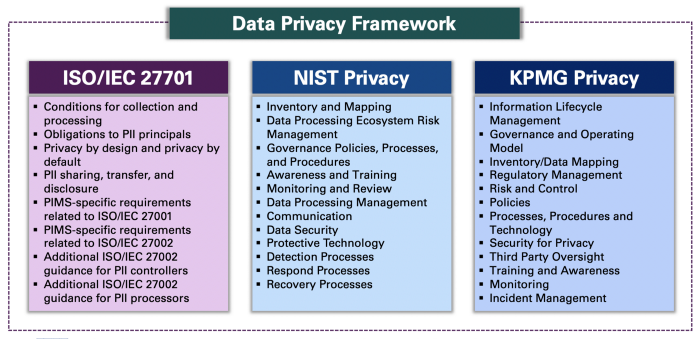
Sumber: KPMG Presentation about Data Privacy

Saya coba rangkum poin-poin yang ada pada ISO 27701 pada gambar di atas. Dalam artikel sebelumnya dan juga podcast tentang Data Privacy, saya sebutkan bahwa pemilihan standar, framework, dan best practice tergantung dari preferensi organisasi. Jika organisasi sudah familiar dengan NIST Cybersecurity Framework, bisa menggunakan NIST Privacy Framework agar lebih mudah alignment Privacy Program-nya. Jika organisasi lebih nyaman dengan ISO, apalagi perusahaan sedang atau sudah mendapatkan ISO 27001, akan lebih selarasa jika mengadopsi ISO 27701 ini. Kalau saya pribadi, dapat juga menggunakan privacy framework yang dibuat oleh KPMG, mengingat saat ini saya bekerja sebagai konsultan di KPMG. Privacy Framework ini juga sudah align dengan General Data Protection Regulation (GDPR) Eropa.

Karena pada artikel ini saya akan bahas dari sisi ISO, maka perlu saya sampaikan juga bahwa ISO 27701 sudah align dengan GDPR karena pada lampiran ISO ini terdapat mapping-nya ke GDPR. Untuk mapping ke RUU PDP bagaimana? Ada, tapi silakan mapping sendiri ya :)

PII for Controller and PII for Processor

Selain terdapat ekstensi atau tambahan kontrol untuk ISO 27001 dan ISo 27002, ISO 27701 juga memiliki tambahan kontrol untuk Data Controller dan Data Processor. Di artikel sebelumnya, sudah saya bahas juga bedanya Data Controller dan Data Processor.

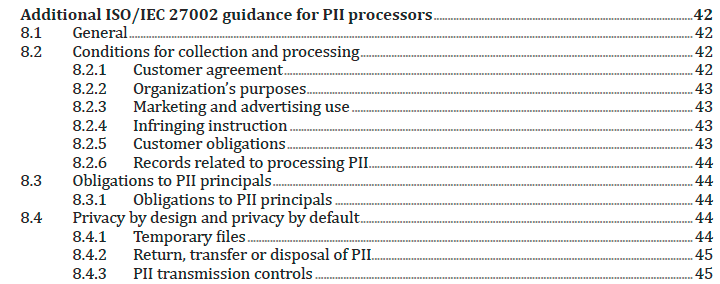
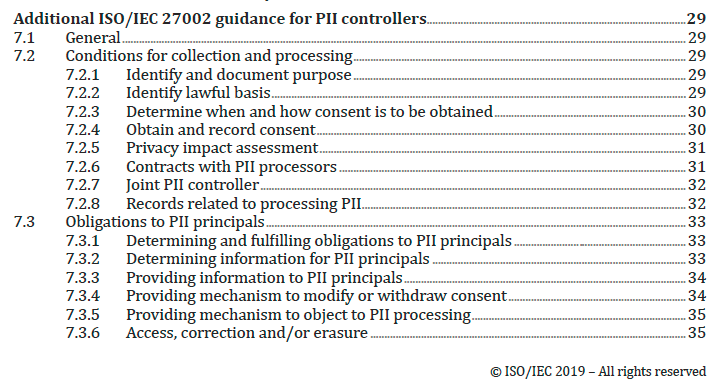
ISO 27701, Privacy Management
Sumber: Preview ISO 27701
ISO 27701, Privacy Management
Sumber: Preview ISO 27701

Apaka saja sih yang diatur dari Data Controller dan Data Processor? Berikut saya listdown kebutuhannya.

Data Controller

Kewajiban Data Controller adalah sebagai berikut.

  1. Pengumpulan dan pemrosesan data. Dalam pengumpulan dan pemrosesan data, Data Controller wajib melakukan identifikasi tujuan, menentukan mekanisme dalam memperoleh persetujuan (consent) dari data owner, menentukan mekasisme privacy impact assessment, pengaturan kontrak dengan Data Processor, dan penyusunan catatan/record terkait pemrosesan data pribadi.
  2. Kewajiban terhadap PII Principals/Data Owner. Data Controller wajib mentukan informasi apa saja yang akan dikumpulkan dari Data Owner, menyediakan informasi terkait mekanisme mengubah dan membatalkan consent, memastikan hak data owner untuk mengakses, mengubah, dan menghapus informasi data pribadi dapat dilakukan, dan menentukan mekanisme penanganan permintaan dari data owner.
  3. Privacy by Design dan Privacy by Default. Data Controller wajib membatasi informasi apa saja yang dikumpulkan dan diproses, memastikan tercapainya akurasi dan kualitas informasi, menerapkan data minimization, menentukan mekanisme retensi dan disposal informasi, dan mengendalikan proses pengiriman/transmisi data pribadi.
  4. PII sharing, transfer, and disclosure. Data Controller wajib melakukan pemantauan dan tracking terhadap aktivitas sharing/transfer PII, khususnya antar yuridiksi dan kepada third party.

Area yang menjadi kewajiban Data Processor pada dasarnya sama dengan Data Controller. Namun, untuk masing-masing (empat) area di atas, terdapat sedikit perbedaan di detil kontrol yang harus diimplementasikan.

Sumber: Preview ISO 27701

Jika melihat lampiran dari ISO 27701, terdapat mapping ke beberapa standar yang lain.

Prinsip Data Privasi

Berdasarkan ISO 29100, terdapat 11 prinsip data privasi yang secara ringkas saya bahas sebagai berikut.

  1. Consent and choice. Data controller dan data processor wajib memberikan pilihan/opsi yang jelas dan memudahkan data owner dalam menentukan pilihan dan persetujuan atas informasi yang akan dikumpulkan darinya. Jika informasi dihimpun melalui sistem elektronik, maka penyedia sistem elektronik wajib memberikan opsi (opt-in atau opt-out) terkait dengan penggunaan data pribadi untuk kebutuhan tertentu, misalnya marketing dan analytics.
  2. Purpose legitimacy and specification. Data controller dan data processor wajib memberikan informasi yang sejelas-jelasnya kepada data owner perihal tujuan dari pengumpulan data dan juga penggunaan data setelah masuk ke dalam sistem elektronik. Jika pada kebijakan privasi atau Terms & Conditions tidak menyebutkan bahwa data akan dishare ke third pary, ya jangan dishare.
  3. Collection limitation. Data controller dan data processor wajib membatasi informasi yang dikumpulkan dari data owner seminimal mungkin. Selain dari sisi informasi yang dikumpulkan, pembatasan dilakukan juga terhadap pihak/orang dan sistem elektronik yang diperbolehkan untuk mengumpulkan data pribadi. Bisa dibilang, need-to-know basis saja.
  4. Data minimization. Data minimization masih berhubungan dengan collection limitation, bedanya pada prinsip ini, data yang disimpan dan disajikan kepada pihak-pihak terkait benar-benar dalam keadaan yang minimized / anonymized / masking. Sebagai contoh, untuk pemrosesan data kartu kredit, tentunya nomor kartu yang tersimpan di sistem tidak akan full 16 digit, hanya 4 digit terakhir yang disampaikan. Untuk melakukan minimizatio yang efektif, tentunya butuh teknologi. Saya sarankan anda sedikit googling tentang Tokenization.
  5. Use, retention and disclosure limitation. Prinsip ini sudah jelas, bahwa data controller dan data processor harus membatasi penggunaan data, penyimpanan data, dan juga pengungkapan data.
  6. Accuracy and quality. Sebagai bagian dari data/information quality atau quality management, tentunya data/informasi yang disimpan dan diproses harus akurat dan lengkap agar dapat dipercaya atau tidak diragukan integritasnya.
  7. Openness, transparency and notice. Prinsip-prinsip keterbukaan dan transparansi ini berlaku terutama pada saat di awal proses pengumpulan data, dan juga ketika terjadi insiden yang melibatkan data pribadi, misalnya data breach. Penyedia sistem elektronik wajib menunjukkan transparansi kepada konsumen dan lembaga negara terkait sesuai yang diatur dalam UU, Peraturan Pemerintah, maupun Peraturan Menteri yang berlaku.
  8. Individual participation and access. Data controller atau penyedia sistem elekronik wajib memberikan kemudahan kepada data owner untuk mengakses, mengubah, dan menghapus data pribadi mereka pada sistem. Hal ini ditujukan agar data owner dapat memastikan bahwa data yang disimpan adalah data yang akurat dan lengkap.
  9. Accountability. Data controller dan data processor wajib menerapkan proses pengendalian dan pengelolaan data pribadi yang sesuai dengan prinsip-prinsip dan regulasi terkait data privacy. Tentunya untuk mencapai hal tersebut, top management organisasi harus memberikan dukungan atas implementasi program untuk perlindungan data pribadi. Organisasi dapat membuat kebijakan dan prosedur terkait perlindungan data pribadi, membuat Privacy Program, dan menunjuk individu/tim untuk melakukan aktivitas terkait Data Privacy dan Data Protection. Hal ini dibutuhkan agar nantinya jika terdapat insiden terkait data privacy (misal data breach), organisasi akan lebih siap dalam menghadapi dan menangani insiden tersebut.
  10. Information security. Prinsip ini sudah saya jelaskan pada artikel Relevansi Data Privasi dan Data Protection. Keduanya adalah hal yang berbeda namun tidak dapat dipisahkan. Untuk memastikan pengelolaan data privacy dapat berjalan dengan baik dan dengan risiko yang minimal, tentunya organisasi harus menerapkan praktik-praktik keamanan informasi (dalam hal ini data protection) untuk meastikan bahwa organisasi memiliki kontrol yang cukup dalam melindungi data pribadi.
  11. Privacy compliance. Berbicara compliance pasti berhubungan dengan regulasi / hukum. Organisasi wajib menerapkan mekanisme perlindungan data pribadi yang sesuai dengan peraturan/regulasi/hukum terkait Data Privacy dan Data Protection yang berlaku. Saya sudah bahas sedikit tentang hal ini pada artikel saya tentang Pengenalan Data Privacy.

Kesimpulan

ISO 27701 memiliki konten yang cukup komprehensif bagi organisasi untuk mengimplementasikan Privacy Management. Sebelum mengimplementasikan Privacy Program, tentunya organisasi perlu memahami prinsip-prinsip data privacy, peraturan/regulasi terkait, dan juga mekanisme implementasi data privacy program.

Jumat, 22 Desember 2023

Tech Trends Taking Over Google in 2024: A Deep Dive


Tech Trends Taking Over Google in 2023: A Deep Dive

Technology marches on at a relentless pace, constantly churning out new advancements and redefining how we live, work, and play. As 2023 unfolds, Google Trends reveals a fascinating landscape of tech trends captivating users' interest. Let's delve into some of the most prominent ones and explore their potential impact:

1. Artificial Intelligence (AI): The All-Pervasive Powerhouse

Gambar Artificial Intelligence technology

AI reigns supreme as the undisputed champion of tech trends. Its influence stretches across diverse domains, from healthcare and finance to transportation and manufacturing. AI-powered tools are revolutionizing industries, streamlining processes, and unlocking groundbreaking possibilities. We see its magic in intelligent assistants like Google Assistant and Siri, in medical diagnosis systems that analyze complex data to aid doctors, and in self-driving cars that inch closer to reality. As AI evolves, its ubiquity will only intensify, shaping our future in ways we can barely imagine.

2. Machine Learning (ML): AI's Brainy Sidekick

Gambar Machine Learning technology

Fueling AI's dominance is its close companion, machine learning (ML). ML empowers AI to learn and adapt without explicit programming, allowing it to analyze vast amounts of data and extract meaningful patterns. From recommending products tailored to your preferences to predicting weather patterns with remarkable accuracy, ML's applications are endless. In the coming years, expect ML to further personalize our experiences, optimize resource allocation, and even drive scientific breakthroughs.

3. Immersive Realms: VR and AR Blurring Reality's Lines

Gambar Virtual Reality technology

Virtual Reality (VR) and Augmented Reality (AR) are rapidly transforming the way we interact with the world around us. VR transports us to entirely new digital landscapes, offering unparalleled gaming experiences, virtual tourism, and even immersive training simulations. AR, on the other hand, seamlessly blends digital elements with our physical environment, enriching our daily lives with information overlays, interactive games, and even educational tools. As VR and AR technology matures, expect them to redefine entertainment, education, and even how we work remotely, bridging the gap between the physical and the digital.

4. Internet of Things (IoT): A Symphony of Connected Devices

Gambar Internet of Things technology

The Internet of Things (IoT) is weaving a vast web of interconnected devices, from smart homes and wearables to connected cars and industrial machinery. This network of intelligent devices gathers and exchanges data, enabling automation, remote monitoring, and even predictive maintenance. Imagine a world where your smart thermostat anticipates your temperature preferences, your refrigerator automatically reorders groceries, and your fitness tracker seamlessly integrates with your healthcare system. The possibilities of the interconnected IoT are truly boundless, promising a future of convenience, efficiency, and personalized experiences.

5. Blockchain: Building Trust in a Decentralized World

Gambar Blockchain technology

Blockchain, the technology underpinning cryptocurrencies like Bitcoin, is gaining traction far beyond the realm of digital finance. Its core principle of a secure, distributed ledger offers unprecedented transparency and trust in data transactions. From supply chain management to secure voting systems, blockchain's potential applications are vast. As concerns about data privacy and security mount, blockchain's decentralized nature and tamper-proof records offer a compelling solution, paving the way for a more secure and transparent digital future.

Beyond the Buzzwords: The Ripple Effect of Tech Trends

These are just a few of the tech trends dominating Google searches in 2023. Their impact, however, extends far beyond mere online fascination. They hold the potential to reshape industries, redefine human-computer interaction, and even influence societal structures. As these trends evolve and converge, we can expect:

  • Enhanced personalization: AI and ML will personalize our experiences across domains, from tailored news feeds to customized healthcare plans.
  • Rise of the machines: Automation powered by AI and robotics will reshape the workforce, necessitating a focus on reskilling and adaptation.
  • Ethical considerations: As technology encroaches deeper into our lives, questions about privacy, security, and algorithmic bias will demand careful consideration and responsible development.
  • Emerging digital divides: Access to these transformative technologies must be equitable to ensure all individuals and communities benefit from their potential.

Staying informed about these tech trends is not just about keeping up with the latest gadgets. It's about understanding the forces shaping our future and preparing ourselves for the exciting, yet challenging, landscape that lies ahead. By actively engaging with these trends and fostering responsible development, we can harness their power to build a better, more equitable, and technologically-driven world for all.

Perbedaan dan Persamaan UU PDP ( Perlindungan Data Pribadai) Indonesia dan GDPR Eropa

 Perbedaan UU PDP Indonesia dan GDPR Eropa

Undang-Undang Nomor 27 Tahun 2022 tentang Perlindungan Data Pribadi (UU PDP) di Indonesia dan General Data Protection Regulation (GDPR) di Eropa merupakan dua regulasi yang mengatur tentang perlindungan data pribadi. Kedua regulasi ini memiliki beberapa persamaan, tetapi juga memiliki beberapa perbedaan.

Persamaan UU PDP dan GDPR

Persamaan UU PDP dan GDPR antara lain:

  • Tujuan: Kedua regulasi ini memiliki tujuan yang sama, yaitu untuk melindungi data pribadi individu.
  • Definisi: Kedua regulasi ini memiliki definisi yang serupa tentang data pribadi, yaitu setiap data yang berkaitan dengan seseorang yang dapat diidentifikasi secara langsung atau tidak langsung.
  • Prinsip: Kedua regulasi ini didasarkan pada beberapa prinsip yang sama, yaitu prinsip:
    • Keterbukaan: Pengendali data harus memberikan informasi yang jelas dan transparan kepada subjek data tentang bagaimana data pribadi mereka diproses.
    • Legalitas dan tujuan yang sah: Pengendali data hanya boleh memproses data pribadi jika memiliki alasan yang sah dan legal.
    • Kesesuaian dan relevansi: Data pribadi yang diproses harus sesuai dan relevan dengan tujuan pemrosesannya.
    • Akurasi: Data pribadi yang diproses harus akurat dan mutakhir.
    • Keterkaitan dan penyimpanan: Data pribadi yang diproses harus disimpan dalam jangka waktu yang tidak lebih lama dari yang diperlukan untuk mencapai tujuan pemrosesannya.
    • Keamanan: Data pribadi yang diproses harus dilindungi dari akses, pengungkapan, modifikasi, atau perusakan yang tidak sah.

Perbedaan UU PDP dan GDPR

Perbedaan UU PDP dan GDPR antara lain:

  • Cakupan: UU PDP hanya berlaku untuk data pribadi yang diproses oleh orang atau badan hukum yang berada di Indonesia, sedangkan GDPR berlaku untuk data pribadi yang diproses oleh orang atau badan hukum yang berada di wilayah Uni Eropa, bahkan jika data pribadi tersebut diproses oleh orang atau badan hukum yang berada di luar wilayah Uni Eropa.
  • Sanksi: Sanksi atas pelanggaran UU PDP adalah denda administratif, sedangkan sanksi atas pelanggaran GDPR adalah denda administratif dan pidana.
  • Hak subjek data: GDPR memberikan hak-hak yang lebih luas kepada subjek data, antara lain:
    • Hak untuk dilupakan: Subjek data memiliki hak untuk meminta penghapusan data pribadi mereka dari sistem pengendali data.
    • Hak untuk pembatasan pemrosesan: Subjek data memiliki hak untuk meminta pembatasan pemrosesan data pribadi mereka.
    • Hak untuk data portability: Subjek data memiliki hak untuk menerima data pribadi mereka dalam format yang mudah dibaca dan untuk mentransfer data tersebut ke pengendali data lain.
  • Kewajiban pengendali data: GDPR memberikan kewajiban yang lebih luas kepada pengendali data, antara lain:
    • Kewajiban untuk melakukan penilaian dampak: Pengendali data harus melakukan penilaian dampak jika pemrosesan data pribadi mereka menimbulkan risiko tinggi bagi hak dan kebebasan subjek data.
    • Kewajiban untuk menunjuk DPO: Pengendali data yang mempekerjakan lebih dari 250 karyawan atau yang memproses data pribadi yang sensitif harus menunjuk DPO.

Kesimpulan

UU PDP dan GDPR merupakan dua regulasi yang penting untuk melindungi data pribadi individu. UU PDP memiliki cakupan yang lebih sempit, tetapi GDPR memiliki sanksi yang lebih berat dan memberikan hak-hak yang lebih luas kepada subjek data.